

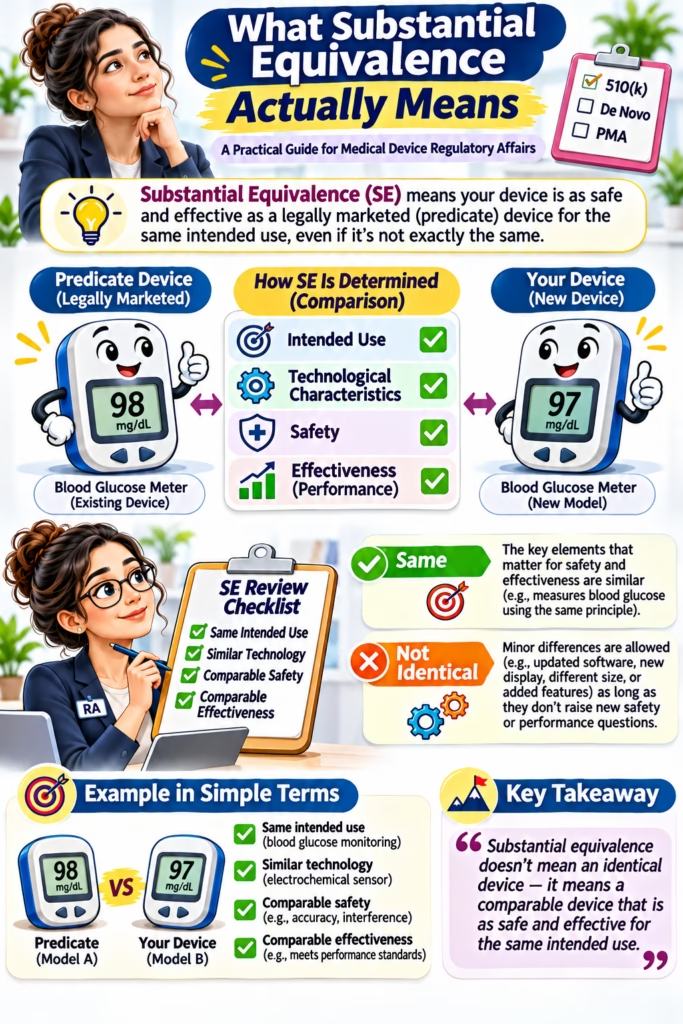
A 510(k) is a structured comparison to a legally marketed predicate, not a statement that two products are identical.
The first thing I would do is slow down and identify the actual regulatory question. Check whether intended use is the same. Compare technological characteristics. If they differ, assess whether the differences raise different questions of safety and effectiveness, then identify supporting performance evidence. That gives you something you can check, discuss, and defend rather than an answer based on memory.
Here is a simple example. A change in a device’s output or energy delivery may require extra testing and a careful explanation of new risks, even when the clinical purpose remains unchanged. That is why I would always ask for the intended use, the device description, and the relevant evidence before making a recommendation.

What does someone in RA actually do here? Often the junior person does not make the final decision. They research the official sources, compare possible routes, gather the right documents, flag gaps, and write a short rationale that a senior colleague can review. That is valuable work, even if you are not the final signatory.
Try this exercise: Write a three-column table: similarity, difference, and evidence needed. Keep it to one page. Add the source, date checked, assumptions, and unanswered questions. If your reasoning changes after checking the official material, that is learning—not failure.
One important limitation: Clinical data do not automatically solve every substantial-equivalence problem. These decisions are specific to the product and market. A short internet post is a starting point, not a regulatory determination.